Introducing Hanlon’s Exception
Hanlon’s Razor is a useful warning against overinterpreting human behavior:
Never attribute to malice that which is adequately explained by stupidity.
It reminds us that incompetence, confusion, haste, and poor preparation often explain conduct that otherwise looks sinister. Before assuming a conspiracy, check whether someone simply made an obvious mistake.
But Hanlon’s Razor has a weakness: the malicious can plead incompetence—and the incompetent can still be useful to the malicious.
So here is a proposed refinement:
Don’t infer malice when incompetence is sufficient—but don’t ignore malice when incompetence is conveniently profitable.
Call it Hanlon’s Exception.
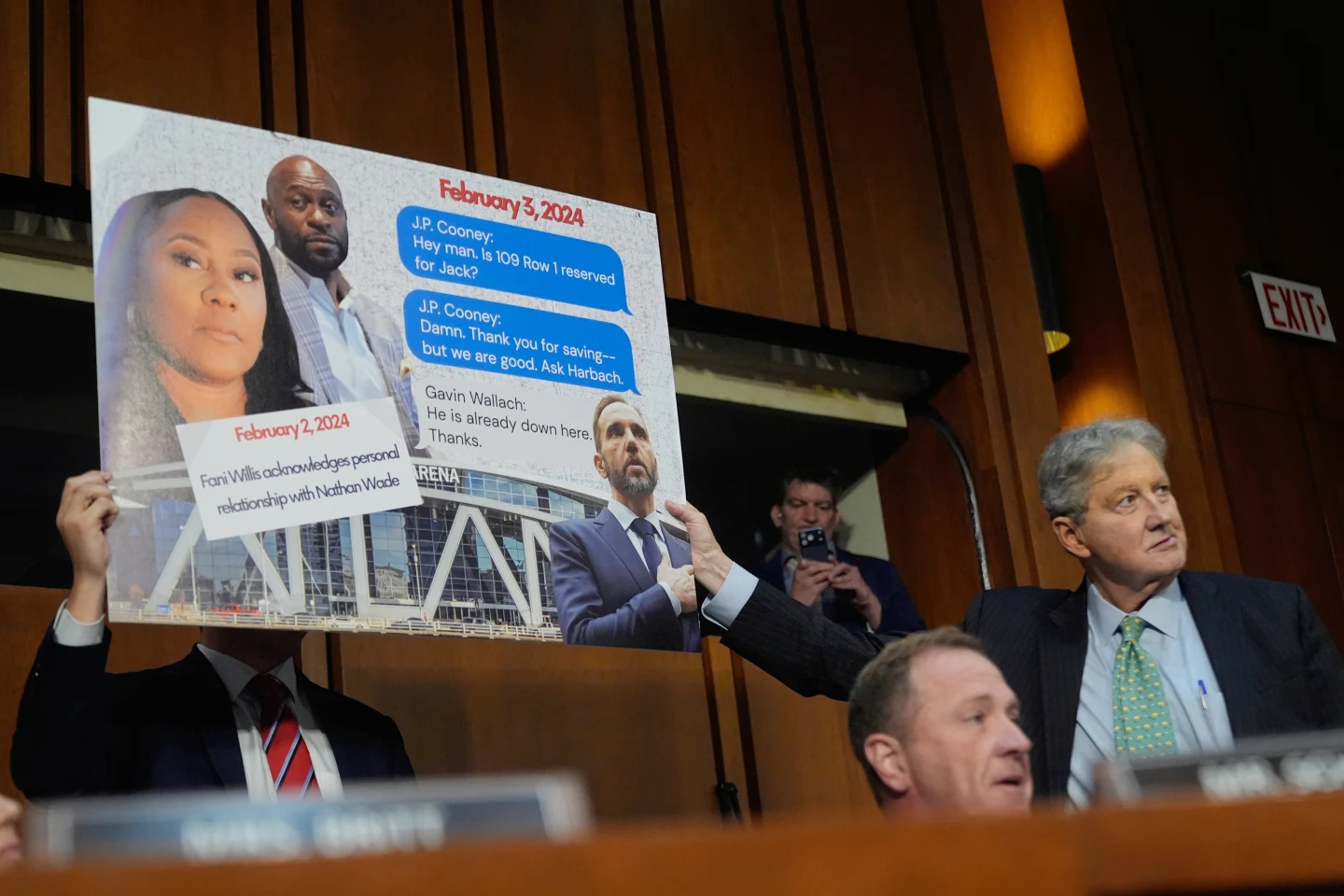
The recent exchange between Sen. Eric Schmitt and former special counsel Jack Smith illustrates the problem. During a Senate Judiciary Committee hearing, Schmitt accused Smith of perjury over whether Smith had attended an Atlanta Hawks basketball game in February 2024. The supposed evidence, however, appears to have involved the University of Iowa Hawkeyes—not the NBA’s Atlanta Hawks. In other words, the foundation of the accusation seems to have been a basic basketball-team mix-up. AP NBC News
The ordinary Hanlon’s Razor interpretation is straightforward: Schmitt and his team were careless, overconfident, or simply confused. They prepared a dramatic accusation, failed to verify a basic fact, and produced a public embarrassment.
That may be exactly what happened.
But Schmitt has still not recanted the accusation. Reporting indicates that he defended the exchange afterward and said the mix-up was not a mistake. Washington Examiner
That changes the question. We are no longer asking only whether the original error was stupid. We are asking what happens when an error becomes politically useful.
Who benefits when a senator publicly declares that an opposing figure committed perjury? Who benefits when the news cycle shifts from the substance of a congressional hearing to a sensational accusation? Who benefits when supporters can frame criticism of the accusation as hostility toward the broader political cause?
Perhaps nobody planned the mistake. Perhaps there was no conspiracy. But political actors do not need to engineer every false claim in order to benefit from one. Sometimes an unsupported allegation generates attention, reinforces an existing narrative, energizes a political base, and then survives even after its factual basis collapses.
That is the uncomfortable space Hanlon’s Razor does not fully address.
It is easy to say, “This was just Schmitt and his team being stupid.” Maybe it was. But how much have certain Republicans profited—politically, rhetorically, or financially—from the spectacle? And at what point does repeated incompetence stop functioning as an innocent explanation and start functioning as a convenient business model?
Hanlon’s Exception does not require us to prove malicious intent. It asks a more practical question:
Regardless of whether the mistake was deliberate, who gains when it is not corrected?
Comments are closed