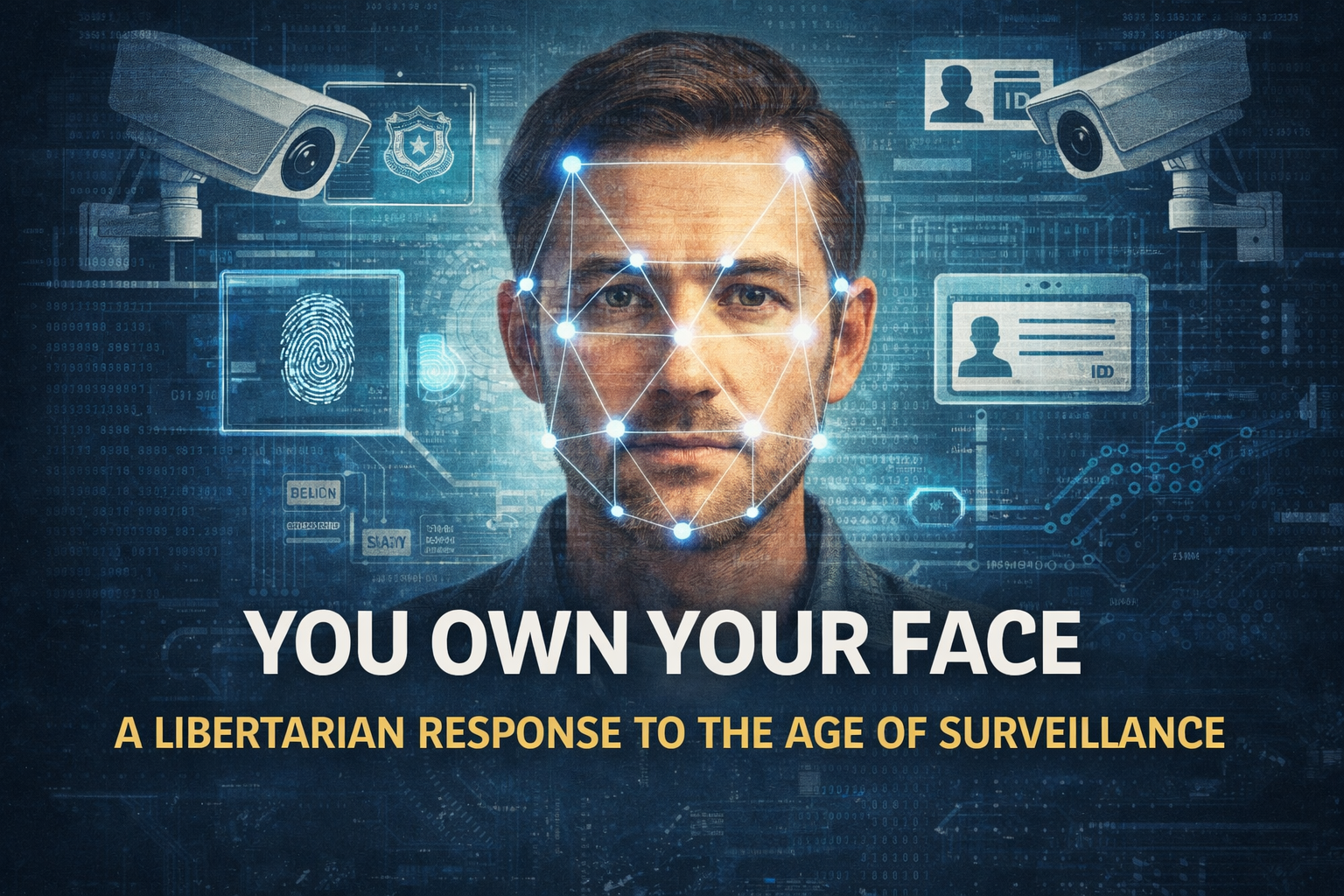
We are living in a moment where something once confined to science fiction has quietly become reality.
Facial recognition is no longer experimental. It is embedded in everyday systems—traffic cameras, retail security, social media platforms, voter databases, and even government services like the DMV. Private companies like Flock deploy networks of cameras that can track vehicles and, increasingly, people. Governments and corporations alike now possess the ability to identify, catalog, and follow individuals in ways that would have been unthinkable just a generation ago.
Civil liberties organizations like the ACLU have been sounding the alarm for years: this level of surveillance represents a fundamental threat to privacy and freedom.
And they’re right.
But here’s the uncomfortable truth: we cannot put the genie back in the bottle.
The technology exists. It will not disappear. Banning it outright is unlikely to succeed and may simply push its use underground or into less accountable hands.
So the question is not whether the technology exists.
The question is: Who controls it?
A Simple Principle: You Own Yourself
At Let.Live, we begin with a foundational idea: you own yourself.
That principle doesn’t just apply to your body. It applies to your labor, your choices, your voice—and in the digital age, it must also apply to your likeness and your data.
Your face is not public property.
Your identity is not a commodity.
Your digital footprint is not free for the taking.
If we accept that individuals own themselves, then it follows naturally that individuals must own the right to their image, their biometric identifiers, and the data derived from them.
This idea is hardly new. Celebrities already have significant legal protections about how their likeness is used. We extend that legal framework to include everyone.
A Libertarian Framework for the Surveillance Age
Instead of trying to eliminate technology, we should restructure the rights around it—shifting power away from institutions and back to individuals.
Here is a framework grounded in that philosophy:
1. Limited Default Retention
No company or government entity may store an image or biometric data of an individual for more than 7 days after recording—except for legitimate, immediate security purposes.
This allows for:
- Investigation of recent crimes
- Operational security
- Basic law enforcement needs
But prevents:
- Long-term mass surveillance databases
- Passive tracking of innocent people
- Permanent behavioral profiling
2. Ownership Requires Permission
Beyond that short window, no entity may store your likeness or personal data without your explicit, revocable consent.
Not implied consent.
Not buried consent.
Not “by using this service you agree…”
Explicit. Informed. Revocable.
3. No Blanket Consent to “Third Parties”
The phrase “we may share your data with trusted partners” should be treated for what it is: a loophole big enough to erase privacy entirely.
Under a Let.Live framework:
- Every single transfer of your data requires specific consent
- You must know who is receiving it
- You must know why they are receiving it
No umbrella agreements.
No vague disclosures.
No hidden pipelines.
4. Consent Travels With the Data
Any entity that receives your data is bound by the same license terms you granted originally.
They cannot:
- Expand usage
- Extend retention
- Resell access
Without coming back to you.
5. Time-Limited Licenses
All permissions expire automatically after one year.
If an organization wants continued access, they must:
- Ask again
- Explain again
- Earn it again
Consent is not permanent.
Because you are not permanently owned.
6. You Can Charge for Your Data
If your likeness and personal data have value—and they clearly do—then you should be able to capture that value.
Companies profit from your identity every day.
A free society recognizes your right to say:
“If you want access to me, you pay for it.”
7. Exceptions for Criminal Conviction
If an individual has lost certain rights through due process (e.g., conviction for a crime), limited exceptions may apply.
But those exceptions must be:
- Narrow
- Transparent
- Accountable
Not a blanket excuse for mass surveillance.
From Surveillance State to Ownership Society
Right now, the trajectory is clear:
- Governments are gaining surveillance power
- Corporations are aggregating identity data
- Individuals are losing control
That is not an accident—it is the natural outcome of power flowing in one direction.
If we want to reverse that, we don’t just regulate behavior.
We redefine ownership.
We move from a world where:
“They collect your data unless you stop them”
To a world where:
“They cannot collect your data unless you allow them”
The Let.Live Principle in Action
At its core, this is about consent culture applied to technology.
Just as no one has the right to control your body without your consent,
no one should have the right to control your identity without it.
This is how we preserve liberty in the digital age:
- Not by pretending technology doesn’t exist
- Not by trusting institutions to restrain themselves
But by ensuring that every piece of power flows from the individual outward
Conclusion: You Own Your Face
We cannot undo the invention of facial recognition.
But we can decide what kind of society it exists in.
A society where:
- You are watched
- You are tracked
- You are cataloged
Or a society where:
- You choose
- You control
- You own
At Let.Live, the answer is clear:
You own your face.
And it’s time the law caught up with that reality.
***editors note — this article was formatted with assistance from AI for this WordPress Theme***
Comments are closed